
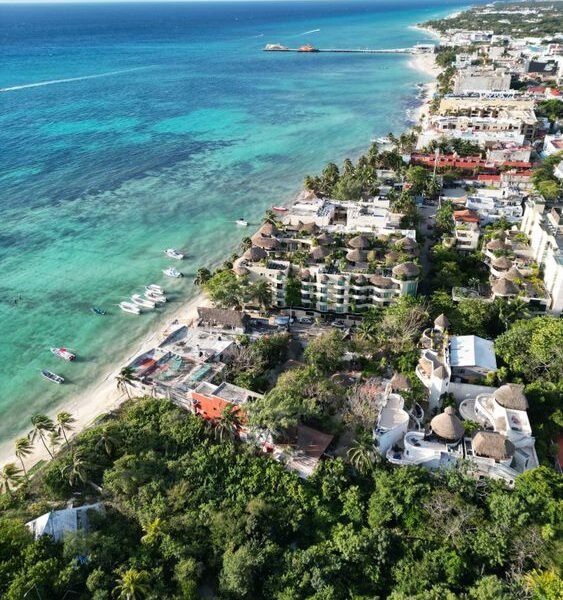
If Playa del Carmen is your first trip to Mexico — or your first time outside a resort anywhere — you probably have questions. How safe is it? What should I pack? Will I get sick from the food? Do I need to speak Spanish? Can I drink the water?
We have lived here for years and watched hundreds of first-time visitors arrive. Some land prepared and hit the ground running. Others spend their first two days figuring out things they could have known in advance. This guide covers everything you need to arrive confident and start enjoying Playa del Carmen from day one.
Getting There
You fly into Cancun International Airport (CUN). There is no airport in Playa del Carmen. From Cancun airport, you have several options for the 45 to 60 minute journey south to Playa:
ADO Bus is the cheapest option. The bus station is in the airport, buses run frequently, and the ride drops you at Playa del Carmen’s bus terminal on 5th Avenue. Cost is around 250-300 pesos one way.
Private transfers can be pre-booked online and offer door-to-door service. A driver meets you at arrivals with your name on a sign and takes you directly to your hotel. Worth the extra cost if you are arriving late, travelling with children, or just want zero hassle after a long flight.
Taxis from the airport are available but more expensive than transfers, and you should agree on the price before getting in. Never use an unlicensed taxi at the airport.
Rental cars are available at the airport if you plan to explore the Riviera Maya independently. Driving in Mexico is straightforward, but read our Getting Here and Around page for tips on insurance, speed bumps (topes), and police stops.
Money
The Mexican peso (MXN) is the local currency, and you should use it. Many tourist businesses accept US dollars, but the exchange rate they offer is terrible — you will overpay by 10 to 20 percent on everything. Use pesos.
ATMs are widely available in Playa del Carmen. Use ATMs inside banks (Santander, HSBC, Banorte) rather than standalone machines on the street, which charge higher fees and carry a slightly higher skimming risk. Withdraw pesos, not dollars.
Credit cards are accepted at most restaurants, hotels, and shops in the tourist areas, but smaller businesses, taco stands, and colectivos are cash-only. Always carry some cash.
Tipping is customary. Ten to fifteen percent at restaurants, 20-50 pesos for hotel staff who help with bags, and small tips for tour guides are all standard.
Safety
Playa del Carmen is generally safe for tourists exercising normal precautions. The vast majority of visitors have trouble-free trips. That said, use common sense.
Stay in well-lit, populated areas at night. The tourist zones along 5th Avenue and the beach are well-patrolled. Side streets further from the centre can be quieter and darker.
Do not buy drugs. This is the single most important safety rule. Drug-related incidents account for almost all serious crime affecting tourists in the Riviera Maya. If someone offers you something on the street, say no and keep walking.
Keep valuables secure. Use your hotel safe. Do not leave phones, cameras, or wallets unattended on the beach. This is the same advice you would follow in any tourist town worldwide.
Read our full Safety and Practicalities guide for detailed information on staying safe.
Water and Food
Do not drink the tap water. This applies everywhere in Mexico. Drink bottled water, which is cheap and available everywhere. Hotels provide it. Restaurants use purified water and ice made from purified water, so ice in your drinks is fine.
Street food is generally safe and is some of the best food you will eat in Playa del Carmen. The key indicators of safe street food are the same worldwide — go where the locals go, choose stalls with high turnover, and eat food that is cooked fresh in front of you. Traveller’s stomach is possible, as with any international trip, but most visitors eat street food daily without issues.
The most common cause of stomach problems is actually overindulgence — too many cocktails, too much rich food, and dehydration in the tropical heat. Drink water, pace yourself, and you will be fine.
What to Pack
Light, breathable clothing. Playa del Carmen is hot and humid year-round. Cotton and linen are your friends. You will live in shorts, sandals, and light shirts.
Reef-safe sunscreen. Regular sunscreen damages coral reefs and cenote ecosystems. Many cenotes and eco-parks require biodegradable sunscreen, and some will not let you enter if you are wearing chemical sunscreen. Buy reef-safe before you arrive — it is more expensive in Mexico.
A light rain jacket or umbrella if visiting between June and November (rainy season). Afternoon showers are common but usually short.
Comfortable walking shoes for ruins and cenotes. Flip-flops are fine for town and beach, but Tulum ruins, Coba, and jungle cenotes require closed-toe shoes or sturdy sandals.
A waterproof phone case. You will want your phone at cenotes, on boat trips, and at the beach.
Bug spray with DEET for evenings, especially in the rainy season. Mosquitoes are present year-round but more active after rain.
Language
Spanish is the primary language, but English is widely spoken in the tourist areas of Playa del Carmen. Hotel staff, restaurant servers, tour guides, and shop workers in the 5th Avenue area generally speak functional to fluent English.
That said, learning a few Spanish phrases goes a long way. Locals genuinely appreciate the effort, and basic Spanish helps enormously if you venture beyond the tourist core. “Por favor,” “gracias,” “la cuenta, por favor” (the bill, please), and “no, gracias” will cover most situations.
Getting Around Town
Playa del Carmen is walkable. This is one of its best features. The town centre is compact, and 5th Avenue — the main pedestrian street — runs parallel to the beach for over 20 blocks. Your hotel, the beach, restaurants, and most attractions are all within walking distance.
For trips outside the centre, colectivos (shared minivans) run along the highway and are extremely cheap. They connect Playa del Carmen to Tulum, Cancun, and points in between. ADO buses serve longer routes including Merida, Valladolid, and Chichen Itza.
Taxis are available throughout town. Always agree on the price before getting in, as meters are not used. Short trips within the centre cost 40 to 80 pesos.
When to Visit
High season runs from December through April — dry weather, warm temperatures, and the biggest crowds. Hotels are more expensive and the town is busiest.
Shoulder season (May-June and November) offers good weather, fewer tourists, and better hotel rates.
Rainy season runs from July through October, with afternoon showers that are usually intense but brief. Temperatures are hotter, humidity is higher, but prices are lowest and the town is quietest. Hurricane season peaks in September and October, but direct hits on Playa del Carmen are rare.
The best overall time to visit is late November through early December or April through May — you get pleasant weather, manageable crowds, and reasonable prices.
The Bottom Line
Playa del Carmen is an easy, rewarding destination for first-time visitors. The town is safe, walkable, affordable, and full of things to do. Come with pesos, reef-safe sunscreen, and a willingness to eat tacos from a street cart, and you will wonder why you did not come sooner.
Welcome to Playa. You are going to love it here.