
The Yucatan Peninsula sits on a massive limestone shelf riddled with underground rivers, and where that limestone has collapsed, you get cenotes — natural sinkholes filled with crystal-clear freshwater that the ancient Maya considered sacred entrances to the underworld. Playa del Carmen is surrounded by some of the best cenotes in Mexico, and swimming in one is easily the most unforgettable thing you can do on a trip here.
We have visited dozens of cenotes over the years. Some are tourist-heavy but worth it. Others are tucked down dirt roads with no signs and no crowds. Here are our ten favourites, all within day-trip distance of Playa del Carmen.
1. Cenote Azul
Cenote Azul is one of the most accessible cenotes from Playa del Carmen, located just off the highway heading south toward Tulum. It is a large, open-air cenote with multiple swimming areas, cliff-jumping spots, and shallow sections suitable for children. The water is impossibly clear and refreshingly cool. There is a small restaurant on site, and the entrance fee is modest. This is an excellent first cenote for visitors who have never experienced one — the scale and beauty are immediately impressive without requiring any climbing or cave swimming. Families, casual swimmers, and groups of friends all find something to enjoy here.
2. Gran Cenote
Gran Cenote sits just outside Tulum and is one of the most photographed cenotes in the Riviera Maya. A wooden boardwalk loops around the cenote, connecting open-air swimming areas with a partially enclosed cavern section where stalactites hang above the waterline. Snorkelling here is exceptional — the water clarity allows you to see turtles, fish, and the dramatic rock formations beneath you. Arrive early to beat the crowds, as Gran Cenote is popular with tour groups by mid-morning. The facilities are well-maintained with lockers, showers, and a small shop.
3. Cenote Dos Ojos
Dos Ojos — “Two Eyes” — is one of the most famous cenotes in the world, and for good reason. The cenote system is part of one of the longest underwater cave networks on earth, making it a premier destination for certified cave divers. But you do not need to be a diver to enjoy it. Snorkelling through the cavern entrance is extraordinary, with shafts of light cutting through the darkness and illuminating the turquoise water below. There are two main cenotes connected by an underwater passage, and the experience of swimming between limestone formations in cathedral-like silence is unlike anything else in the Riviera Maya.
4. Cenote Ik Kil
Cenote Ik Kil is the one you have seen in photographs — a deep circular pool with vines hanging from the rim sixty metres above. Located near Chichen Itza, it makes a natural pairing with a visit to the ruins. The cenote has been developed for tourism with carved steps leading down to the water, changing facilities, and a restaurant above. Despite the infrastructure, the cenote itself remains breathtaking. Swimming at the bottom of what feels like a giant natural well, with roots and vines trailing down the walls and birds circling far above, is genuinely awe-inspiring. Combine it with a Chichen Itza day trip for one of the best days out in the Yucatan.
5. Cenote Suytun
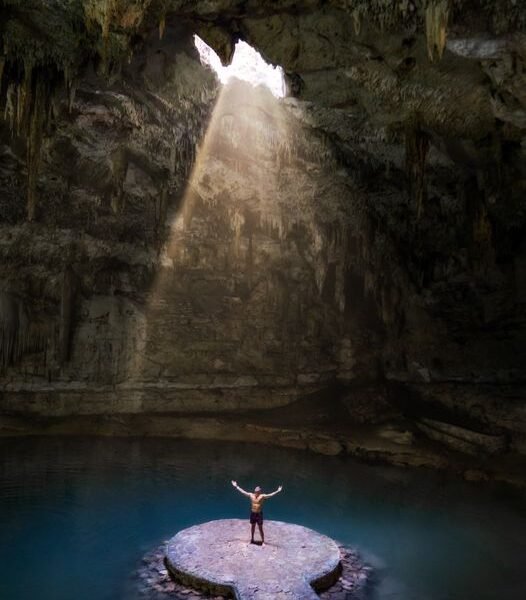
Cenote Suytun has become famous for its stone platform that extends into the centre of the cavern, creating a dramatic photo opportunity where a shaft of light hits the platform from a hole in the ceiling above. The cenote is fully enclosed, giving it a cathedral atmosphere with stalactites and deep blue water. Photography aside, swimming here is a unique experience — the acoustics, the light, and the scale of the cavern create something genuinely spiritual. It is located near Valladolid, making it a good stop on a day trip to Chichen Itza or the eastern Yucatan.
6. Cenote Cristalino
Cenote Cristalino is located right next to Cenote Azul on the highway south of Playa del Carmen, making it easy to visit both in one trip. It is smaller and more intimate than its neighbour, with rock ledges for jumping and a lush jungle canopy overhead. The water is — as the name promises — crystal clear, and the cenote has a natural, less-developed feel compared to some of the more tourist-oriented sites. Snorkelling reveals fish and interesting rock formations beneath the surface. It is a local favourite for a reason.
7. Cenote Jardin del Eden (Ponderosa)
Jardin del Eden, also known as Cenote Ponderosa, is a large open-air cenote surrounded by jungle on the road between Playa del Carmen and Tulum. The cenote is popular with both snorkellers and scuba divers, as the underwater passages connect to the broader cave system. The surface swimming is excellent, with the cenote large enough to spread out and find quiet corners. Jumping spots from the surrounding rocks add excitement. On weekdays it can feel almost private, though weekends draw a bigger crowd. The natural setting is lush and beautiful.
8. Casa Cenote (Cenote Manatee)
Casa Cenote is unique among Riviera Maya cenotes because it connects directly to the ocean through an underground channel. The water is a mix of fresh and salt, and manatees occasionally visit — giving the cenote its alternative name. The setting is open-air with mangroves lining the banks, creating a river-like atmosphere unlike the enclosed caverns of other cenotes. Kayaking, stand-up paddleboarding, and snorkelling are all possible here. The laid-back beachside restaurant adds to the appeal. It is located between Playa del Carmen and Tulum, just off the highway.
9. Cenote Sac Actun (Pet Cemetery)
Cenote Sac Actun is part of the longest surveyed underwater cave system in the world. The cenote itself is a cavern entrance used primarily for diving and guided snorkelling tours. The experience is more adventurous than a typical cenote visit — you swim into a cave system with a guide, navigating through stalactite-filled passages illuminated by torchlight. It earns its nickname from the ancient animal bones preserved in the rock. This is not for the claustrophobic, but for anyone comfortable in the water, it is one of the most extraordinary natural experiences available near Playa del Carmen.
10. Cenote Calavera
Cenote Calavera — “Skull Cenote” — gets its name from the three holes in its limestone ceiling that resemble a skull’s eyes and mouth when viewed from above. Located near Tulum, it is a favourite with locals and adventurous travellers. You can jump through the holes into the deep water below, which is thrilling but not for the faint-hearted. Inside, the cenote is a beautiful enclosed cavern with clear water and dramatic light shafts. It feels wilder and less managed than the bigger commercial cenotes, which is exactly the appeal for many visitors.
Tips for Visiting Cenotes
Arrive early. The most popular cenotes get busy by 10:00 or 11:00, and the experience is dramatically better with fewer people. Bring cash — most cenotes charge entrance fees between 100 and 250 pesos, and not all accept cards. Wear biodegradable sunscreen or, better yet, skip the sunscreen entirely, as chemicals damage the delicate cenote ecosystems. Bring a waterproof phone case or a GoPro — you will want to capture what you see. Most cenotes have basic facilities including changing areas and lockers, but bring your own towel. If you are not comfortable navigating yourself, book a guided cenote tour that covers transport and entrance fees.
Whether you are snorkelling through an underground river, cliff-jumping into a jungle pool, or floating in silence beneath a cathedral of stalactites, cenotes are the single experience that makes the Yucatan Peninsula unlike anywhere else on earth. Do not leave Playa del Carmen without visiting at least one.